
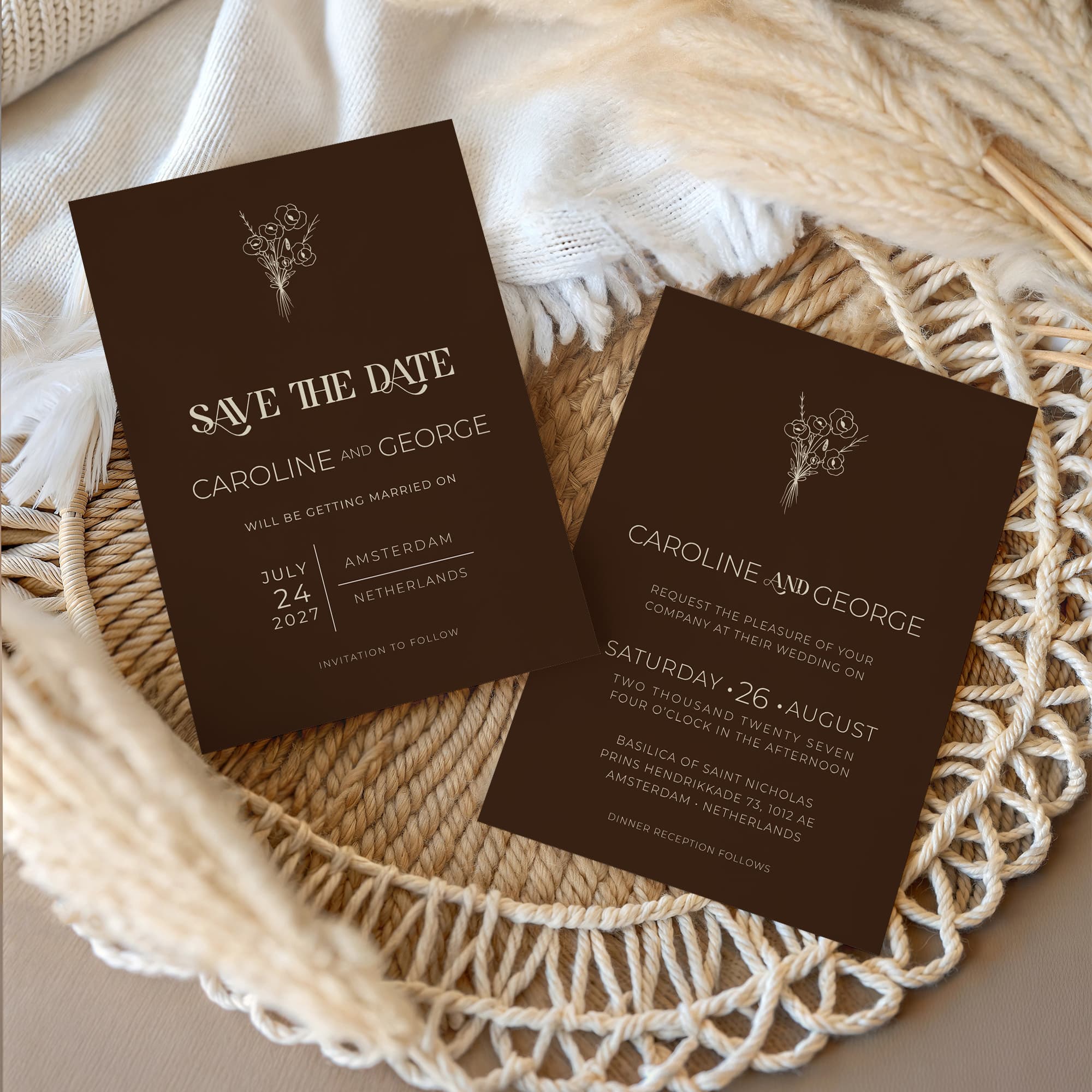
When couples begin planning their wedding stationery, one of the most common questions is simple: what pieces are actually included in a wedding invitation suite?
Many people are familiar with the invitation itself, but modern wedding stationery often includes several additional pieces that help communicate important details to guests and create a cohesive design throughout the wedding.
Understanding the purpose of each piece can help couples choose the stationery that best fits their celebration.
What Is a Wedding Invitation Suite?
A wedding invitation suite refers to the complete set of stationery pieces used to communicate information about a wedding. The suite usually begins with the Save the Date and invitation, but it can also include response cards, information cards, and several pieces used during the wedding itself.
Traditionally, the invitation suite establishes the visual style of the wedding. Colors, typography, and artwork introduced in the invitation often carry through to the rest of the stationery used during the celebration.
The Core Invitation Pieces
The most essential piece in any wedding suite is the invitation itself. This card includes the names of the couple, the date and time of the ceremony, and the location of the event.
Many couples also send Save the Dates several months before the invitation. Save the Dates allow guests to reserve the wedding date before formal invitations are mailed.
Another common piece is the RSVP card. This card allows guests to confirm their attendance and often includes space to indicate meal preferences or additional information requested by the couple.
Details Cards
Many weddings require additional information that does not fit comfortably on the invitation itself. Details cards are used to provide guests with helpful information such as reception locations, directions, accommodations, or wedding websites.
By separating this information onto a details card, the invitation itself remains clean and easy to read.
Additional Stationery Pieces
Beyond the main invitation components, couples often include several additional pieces that help complete the stationery suite.
Menus may be placed at each guest’s seat or displayed at reception tables to describe the meal being served.
Programs are commonly provided for ceremonies and outline the order of events, readings, and participants.
Place cards help guide guests to their assigned seats and also contribute to the overall design of the reception tables.
Thank you cards are traditionally sent after the wedding to express appreciation to guests for attending and for any gifts received.
Day-of Wedding Stationery
Stationery also plays an important role on the wedding day itself. Welcome signs, table numbers, and seating displays help guide guests and maintain the visual style established by the invitation.
When these elements share the same artwork and typography as the invitation suite, the entire event feels more cohesive and thoughtfully designed.
Why a Coordinated Suite Matters
One of the advantages of a coordinated invitation suite is consistency. When the Save the Date, invitation, and day-of stationery share the same design elements, they create a unified visual experience for guests.
This consistency helps reinforce the style of the wedding and creates a polished look across every stage of the celebration.
The Heritage Collection from Patti & Hank was designed with this idea in mind. Each collection includes ten coordinated pieces so couples can carry the same botanical artwork and classic typography from the Save the Date through the reception stationery.
Because the templates are editable in Canva, couples can personalize the wording while keeping the cohesive structure of a traditional wedding invitation suite.
For couples planning their wedding, understanding the purpose of each stationery piece can make the design process much easier and help create a celebration that feels beautifully coordinated from beginning to end.
0 Comments