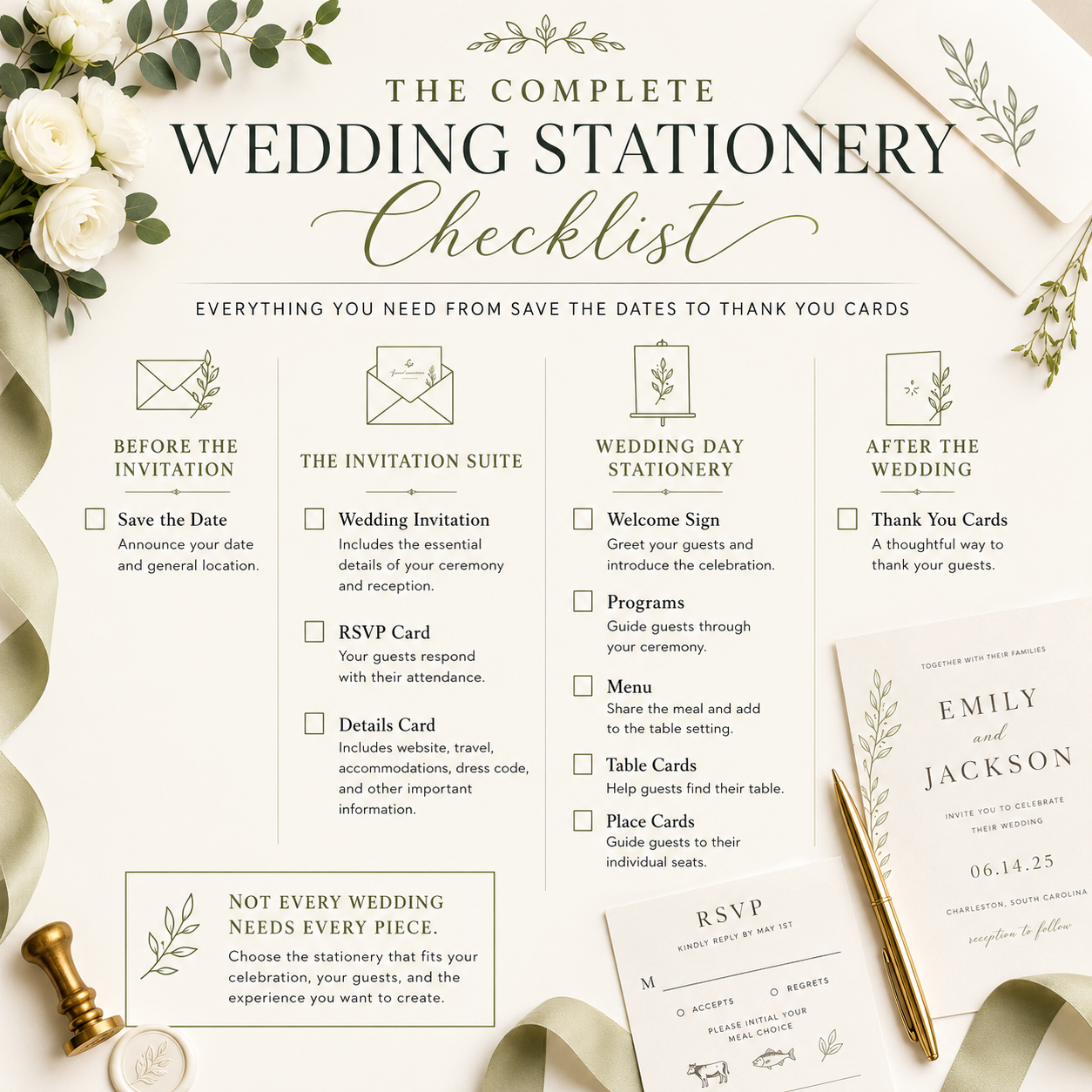
A complete wedding stationery suite can include a Save the Date, invitation, RSVP card, details card, welcome sign, ceremony program, menu, table cards, place cards, and thank you card. Not every wedding needs every piece. What you need depends on your venue, formality, guest list, and how you communicate with guests.
Wedding stationery is one of the first tangible expressions of your wedding. Long before guests see the flowers, the tables, or the dress, they see your Save the Date and invitation.
Here is a complete wedding stationery checklist, from the first announcement to the final thank you, plus how to decide what your wedding actually needs.
What Do You Need Before the Invitation?
Save the Date
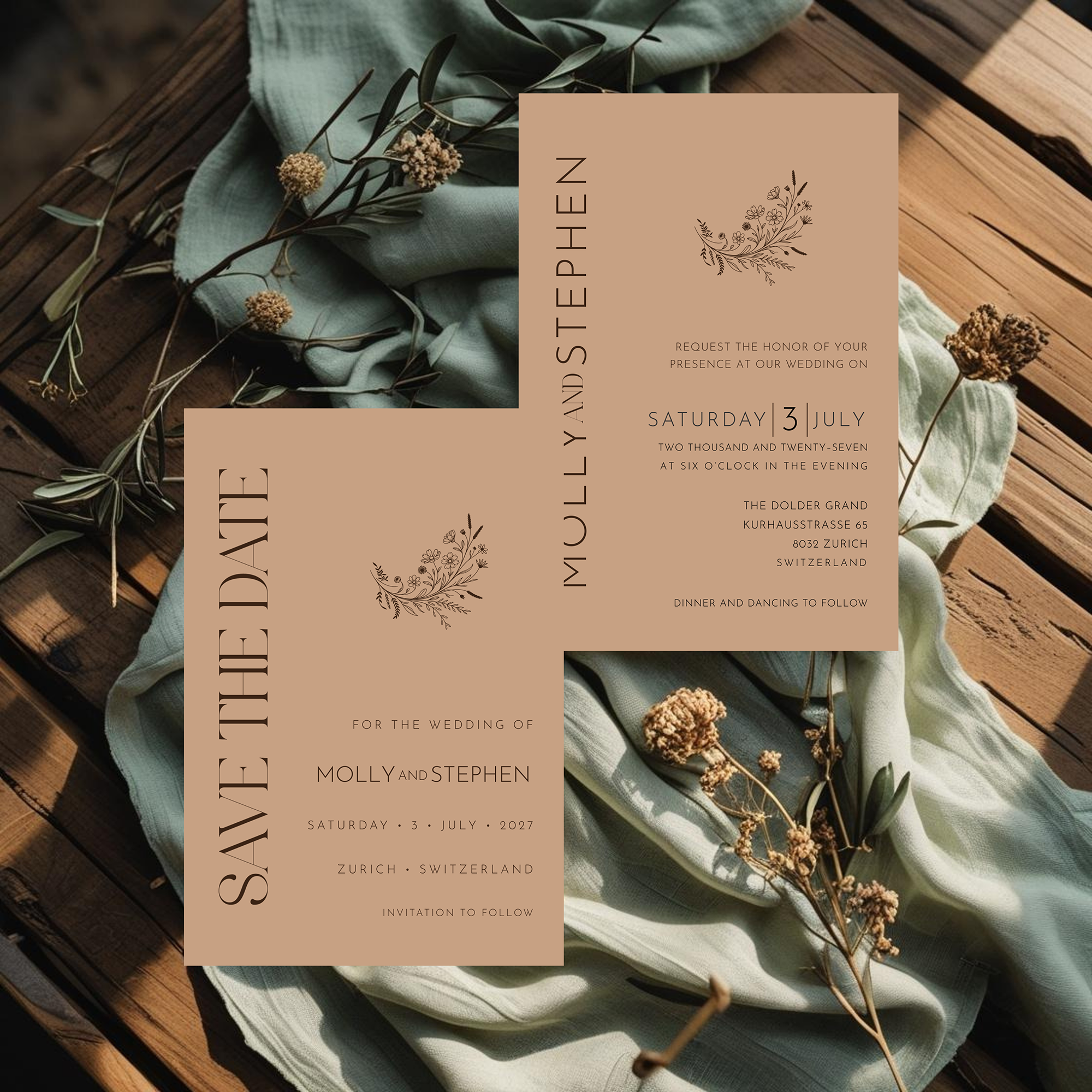
The Save the Date is often the first piece of wedding stationery your guests will see. It announces your date and gives guests time to make travel arrangements, book accommodations, and plan ahead.
At its simplest, a Save the Date should include:
- Your names
- Your wedding date
- The city and state, or destination
- Your wedding website, if you have one
- A note that a formal invitation will follow
It doesn't need to reveal every detail of the wedding. Its job is simply to tell guests when and generally where the celebration will take place. It can, however, begin establishing the visual language of your wedding. Typography, color, and overall style can carry forward into your invitation suite and wedding day stationery, creating a cohesive experience from beginning to end.
What's Included in a Wedding Invitation Suite?
The invitation is the heart of your wedding stationery. Traditionally, an invitation suite contains several separate pieces, so important information can be presented clearly rather than crowded onto one card.
Wedding Invitation
Your invitation communicates the essential details of the celebration while setting its tone. It generally includes:
- The names of the hosts
- The couple's names
- The wedding date
- Ceremony time and location
- Reception information
- Attire, when appropriate
The wording and design also communicate something less tangible: the formality and personality of the wedding. An elegant formal invitation suggests a very different celebration than a casual garden invitation, even before the guest reads the details.
RSVP Card
The RSVP card tells guests how and when to respond. Traditional suites include a printed response card and envelope, while many couples now direct guests to RSVP through their wedding website. Even when responses are collected digitally, an RSVP card can still be useful. It gives guests a clear instruction and keeps the website address from competing with the primary details on the invitation. Depending on your wedding, it may also request meal selections or dietary information.
Details Card
The details card is one of the hardest-working pieces in a suite. Rather than squeezing everything onto the invitation, a separate details card can keep it organized:
- Travel information
- Accommodations
- Transportation and parking
- Dress code
- Weekend events
For destination weddings and multi-day celebrations, it can be especially valuable.
What Wedding Day Stationery Do You Need?
Your stationery doesn't end when the invitations go into the mail. Wedding day stationery helps guests navigate the celebration while carrying your visual identity into the event itself.
Welcome Sign
A welcome sign greets guests as they arrive and connects the setting to the rest of your wedding design. It may be as simple as your names and date, or include a short welcome message. It's not essential, but it can be a beautiful introduction to the celebration when it coordinates with your invitation suite.
Wedding Program
A ceremony program helps guests follow the ceremony and understand the people, traditions, music, or readings involved. It's especially useful for religious ceremonies, ceremonies with cultural traditions, or weddings with several readings and musical selections. A program might include:
- The order of ceremony
- Wedding party
- Officiant
- Readings
- Musical selections
- A remembrance or acknowledgment
For a short, straightforward ceremony, you may decide you don't need one.
Menu
A printed menu tells guests what will be served while adding another design element to the reception table. Menus are especially useful for plated dinners and multi-course meals. Depending on your reception, you might use one per guest, one per couple, or a few per table. For a buffet or very casual meal, individual menus may not be necessary.
Table Cards
Table cards identify each reception table and help guests find where they're seated. Numbers are the traditional choice, but table names can reflect places, flowers, books, or something meaningful to the couple. Whatever you choose, readability matters. A table number isn't doing its job if guests have to stand three feet away to decipher it.
Place Cards
Place cards tell individual guests where to sit and are most useful when you've assigned individual seats rather than tables. They can also communicate meal selections to catering staff through discreet symbols or colors. If guests are choosing their own seats at an assigned table, you won't necessarily need them.
After the Wedding
Thank You Cards
Thank you cards are the final piece of the wedding stationery story. They let you personally acknowledge the people who celebrated with you, traveled to be with you, sent gifts, or helped make the wedding possible. Whenever possible, write a personal message rather than a generic thank you. Mentioning the gift or something specific about the guest's presence makes the note feel genuinely considered. Coordinating thank you cards are a lovely way to complete your suite, but the message inside will always matter more than whether the paper matches.
Do You Really Need Every Piece?
No. A complete stationery suite doesn't mean buying every possible piece. It means having the pieces that make sense for your wedding and letting them work together.
A small local wedding may need little more than a Save the Date, invitation, RSVP method, and thank you card. A formal destination wedding might benefit from a details card, welcome signage, ceremony programs, menus, table cards, and place cards.
Think about what your guests need to know and where they'll need guidance. If a piece communicates useful information or adds something meaningful to the experience, it has a purpose. If it doesn't, you don't need it simply because it appears on someone else's checklist.
How Do You Keep Wedding Stationery Cohesive?
Wedding stationery works best as a collection rather than a series of unrelated pieces. That doesn't mean every item has to look exactly alike. Look for continuity in typography, color, illustration, and spacing instead. A Save the Date can look different from a menu and still clearly belong to the same wedding. Thoughtful consistency is what gives a suite its sense of polish.
Your wedding stationery doesn't need to include everything. It needs to include the right things, beautifully considered and designed with intention.
Want the Full Guide?
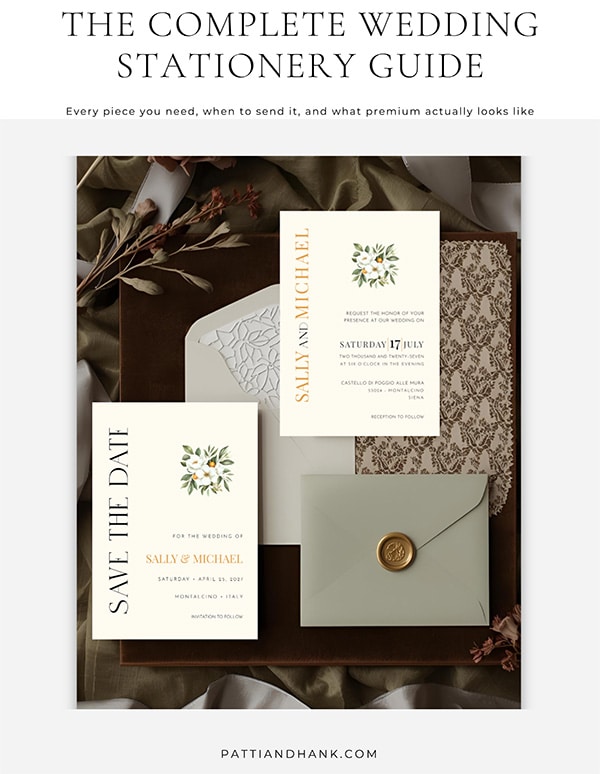
This checklist is a starting point. Download the free Complete Wedding Stationery Guide from Patti & Hank for the full timeline on when to order and send each piece, how to approach digital wedding stationery, typography, printing, and building a suite that works together beautifully.
Frequently Asked Questions
Still Sorting Out What You Need? Get the Free Guide
Download the Complete Wedding Stationery Guide and get the full timeline, plus a closer look at the Heritage Collection, every suite fully coordinated across 12 collections and editable in Canva. Use code HERITAGE10 for 10% off when you're ready.