Quick Answer: Wedding invitations can be printed digitally, offset, letterpress, engraved, thermographed, foil-stamped, embossed, or debossed, and each method changes how the finished piece looks and feels, not just how it's produced. Digital and offset are flat printing methods best suited to color, photography, and fine detail; letterpress, engraving, thermography, foil, and embossing/debossing add texture and dimension. There is no single "best" method, only the best method for a given design, paper, quantity, and budget.
You can spend hours choosing the perfect invitation design, debating between two shades of green and finding exactly the right typeface. But there is another decision that can dramatically change the way your wedding stationery looks and feels: how it's printed.
Printing is sometimes treated as the final production step, something to think about once the design is finished. In reality, the printing method is part of the design. A delicate script printed digitally will feel different when printed in thermography. A simple monogram pressed into thick cotton paper becomes something else entirely. Metallic foil catches the light in a way metallic ink simply cannot.
There isn't one printing method that's right for every invitation. The artwork, paper, quantity, budget, and, most importantly, the look you want all play a part. Understanding what each process actually does makes choosing much easier.
What Makes Digital Printing a Smart Choice for Wedding Stationery?
Digital printing is probably the method most familiar to couples today. A digital file is sent directly to a printer or digital press without creating the plates that other methods require. That makes it particularly well suited to wedding stationery, where quantities are relatively small.
But "digital printing" covers an enormous range of equipment. A home inkjet printer is digital. An office laser printer is digital. A high-end commercial digital press costing hundreds of thousands of dollars is also digital, and the results are not remotely the same.
A good commercial digital printer can reproduce photographs, watercolor artwork, gradients, multiple colors, and very fine details beautifully, which makes it especially appropriate for stationery with botanical illustrations, painted artwork, or several colors. Digital also allows an entire design to be printed in one pass; whether an invitation contains one color or ten generally doesn't require ten separate setups.
There are limitations, though. Not every digital press can accommodate every stock, thickness, or texture; heavy cotton papers and deeply textured sheets can present problems depending on the equipment, and large areas of solid color can be more challenging than they appear on a screen.
Color deserves special mention, too. What you see on your monitor is not a promise of what will come out of a printer. Screens create color with light; printing creates color with ink or toner on paper. The equipment, calibration, paper, and process can all affect the final result.
Digital isn't automatically the inexpensive imitation of "real" printing. On the right equipment, with the right paper and the right design, it can be an exceptionally beautiful choice.
What Is Offset Printing, and When Does It Make Sense?
Before digital printing became the standard for short-run work, offset printing was how much of the high-quality commercial printing we encountered every day was produced. It remains an exceptional method, though it's less commonly used for small quantities of wedding invitations simply because of the setup involved.
Unlike digital printing, where the image goes directly from computer to press, traditional offset requires printing plates. The image transfers from a plate to a rubber blanket and then from the blanket onto the paper; it's "offset" before it ever reaches the sheet. That setup is one reason offset generally becomes more economical as quantities increase; for 75 or 100 invitations, setting up a traditional offset press may be hard to justify.
But cost isn't the only difference. A skilled offset printer has tremendous control over ink and color, producing exceptionally smooth, consistent color and beautifully crisp typography and fine detail. It also opens the door to a wide variety of papers and specialty inks, including spot colors, where a printer mixes one specific ink rather than building a color from cyan, magenta, yellow, and black. For certain designs, that degree of color control matters.
Offset doesn't create the dimensional qualities of letterpress, engraving, thermography, or foil stamping; the ink stays essentially flat on the sheet. That isn't a disadvantage. Sometimes beautiful printing is supposed to be beautifully flat.
Is Metallic Ink the Same as Gold Foil?
This is where printing terminology gets confusing: gold ink and gold foil are not the same thing.
Metallic printing ink contains tiny reflective metallic particles suspended in the ink. When printed, those particles reflect light and give the color a subtle metallic appearance, and it can be beautiful. But if you're picturing the highly reflective, almost mirror-like gold you see on a foil-stamped invitation, metallic ink won't produce it.
Paper makes a difference here as well. Because ink is absorbed differently by different stocks, metallic ink on an uncoated or highly absorbent paper can appear softer and less reflective than it does on a smoother surface.
There's a third option that isn't metallic at all: a gold color built from ordinary CMYK inks. It can read as gold, but there's no metallic material present and no metallic reflection.
So when a printer says they can print something in "gold," ask what they mean. A gold-colored CMYK build, metallic ink, digital foil and traditional hot foil stamping are four different things, and they will not produce the same result.
What Is Thermography, and How Does It Differ from Engraving?
If you've ever run your fingers across an invitation and felt the lettering sitting above the paper, there's a good chance you were touching thermography.
Thermography begins with printed ink. While the ink is still wet, a resinous powder is applied; the excess is removed, and the sheet passes through heat. The powder melts and fuses with the ink, creating a smooth, raised surface. The result can be wonderfully dimensional. Thermography became popular for social stationery because it could create some of the presence associated with engraving without the expense of engraving a metal plate.
But thermography and engraving aren't the same. Thermography tends to have a slightly shinier, more rounded appearance, while engraving can produce extraordinarily crisp raised lines and very fine typography.
Thermography has its own limitations, too: extremely fine lines can be problematic because the powder needs enough printed area to adhere properly, and very large solid areas aren't necessarily ideal either. Where it shines is typography, monograms, borders, and clean line work.
Why Do Couples Fall in Love with Letterpress?
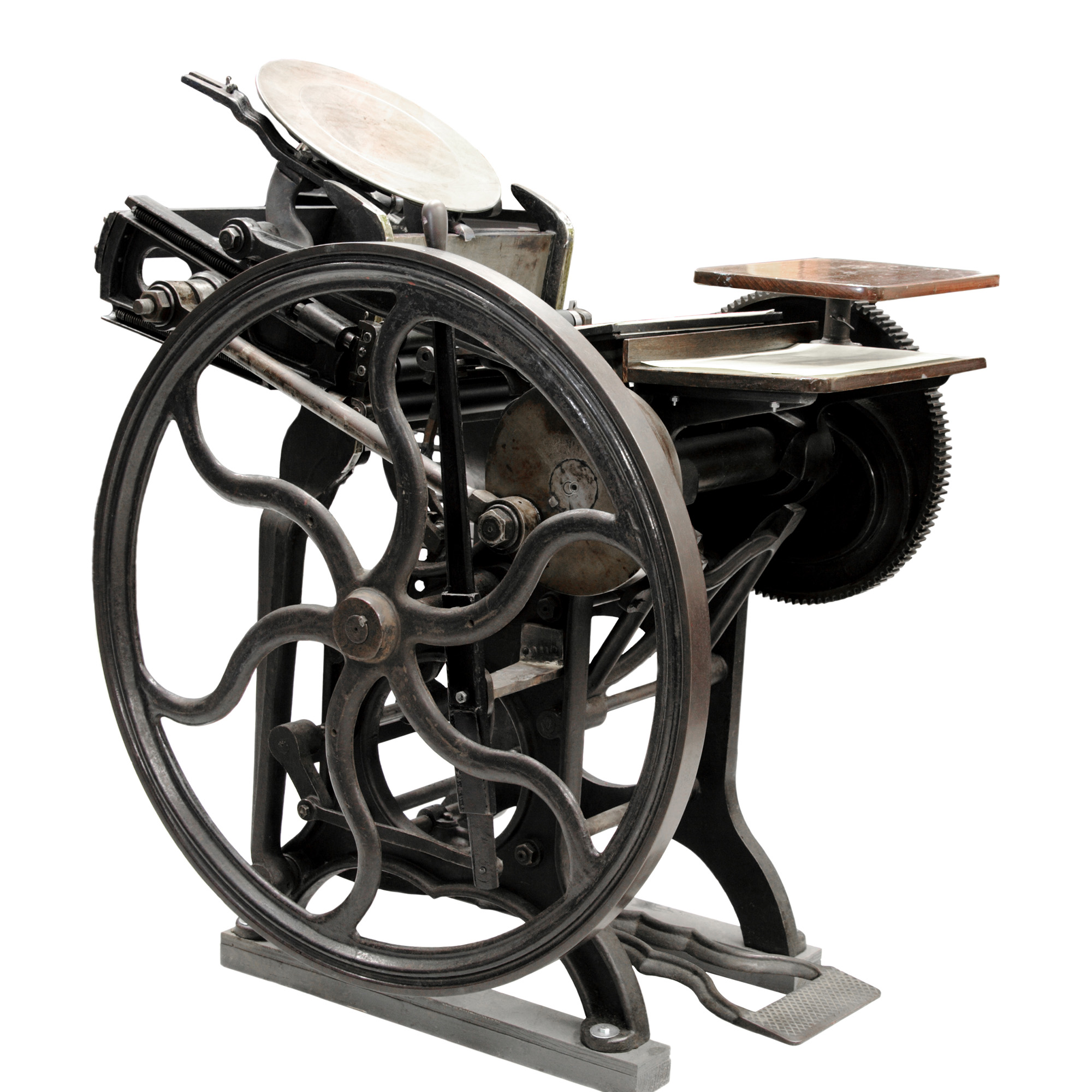
My favorite will always be letterpress. There is something almost magical about inking up that big wheel with just a dab of ink and watching the paper come to life with each impression.
Letterpress isn't fast, and it isn't automated the way we've come to expect modern printing to be. It asks you to pay attention: the ink has to be right, the pressure has to be right, the paper has to be right, and then, one impression at a time, something that existed only as artwork becomes something you can actually feel beneath your fingertips.
A plate carrying the design is inked and pressed into the paper. With the thick, soft stocks commonly used for today's letterpress stationery, that pressure creates the impression that has become part of the appeal. Interestingly, the deep impression we associate with luxury letterpress today wasn't traditionally the goal; printers historically sought a clean transfer of ink without dramatically punching the design into the sheet. The deep impression prized in modern stationery is largely an aesthetic choice. And I admit, I love it.
There is something about beautiful typography pressed into a wonderful cotton sheet that digital printing simply cannot reproduce. The paper isn't merely carrying the design; it becomes part of the design.
Letterpress is especially suited to typography, monograms, line drawings, and borders; simpler artwork can become extraordinary because the impression itself provides the detail. Each ink color traditionally requires its own plate and its own trip through the press, which is one reason a multicolor letterpress piece gets expensive quickly. But letterpress doesn't need a lot. Give me beautiful paper, wonderful typography, and one perfectly chosen ink color, and sometimes that's enough.
What Makes Engraving the Most Formal Choice?
True engraving begins with an image cut or etched below the surface of a metal plate. Ink is worked into those recessed areas and the surface is wiped clean; under considerable pressure, the paper is forced against the plate and draws the ink out of the engraved lines. The result is raised printing with remarkable sharpness: very fine lettering and delicate lines stay incredibly crisp, the ink sits distinctly above the surface of the paper, and the pressure involved can leave a characteristic impression on the reverse of the sheet.
Engraving has a long association with formal invitations and fine personal stationery for good reason: it can produce a level of refinement that's difficult to imitate. It's also one of the more expensive choices, since the plate requires specialized preparation, the presswork requires skill, and multiple colors add additional plates and press runs. For the right invitation, though, there's nothing quite like it.
What Is Foil Stamping, and Why Does It Shine Like Nothing Else?
If you want true metallic brilliance, this is where foil comes in. Traditional hot foil stamping doesn't use ink at all; a heated metal die presses a thin layer of foil onto the paper using heat and pressure. Because you're transferring an actual metallic material rather than simulating one with ink, foil interacts with light very differently. Gold foil can have that unmistakable reflective flash that metallic ink cannot duplicate.
Foil isn't limited to gold, either. Silver, copper, rose gold, and numerous other metallic finishes are available, along with matte, colored, holographic, and specialty foils.
For wedding stationery, foil is often at its most beautiful when it has a reason to be there: a monogram, the couple's names, a fine border, a small crest. It doesn't have to shout to make an impact.
Traditional foil stamping requires a die and a separate production step, which adds cost. Digital foil processes are also available and can make metallic effects practical for smaller quantities, but digital foil and traditional hot foil stamping are different processes and can produce different results. If a printer offers foil, ask which method they use.
What's the Difference Between Embossing and Debossing?
Not everything needs ink. Embossing physically reshapes the paper so the design rises above its surface; debossing creates the opposite effect, pressing the design down into the sheet. When no ink or foil is added, the technique is generally called blind embossing or blind debossing. A monogram, crest, or subtle botanical detail can be absolutely beautiful this way; light and shadow reveal the design rather than color.
Embossing is sometimes confused with thermography because both create something raised, but the processes are completely different: thermography builds material on top of the paper, while embossing reshapes the paper itself. Debossing, similarly, can be mistaken for letterpress. Letterpress traditionally transfers ink while making an impression; a blind deboss creates the impression without ink.
These differences may sound technical until you hold the pieces in your hands. Then they make perfect sense.
Can You Mix Printing Methods in One Suite?
You don't necessarily have to choose one printing method for an entire wedding suite. A digitally printed watercolor invitation might receive a foil-stamped monogram. Letterpress typography might be paired with a blind-debossed crest. One card could receive specialty printing while coordinating pieces are printed digitally.
That can be a beautiful way to manage a budget, too. Instead of spending money on specialty printing everywhere, decide where it will have the greatest impact. Luxury doesn't require doing everything to everything; it requires knowing where the details matter.
So, Which Printing Method Is Best?
There isn't one. The better question is: which printing method is best for this design, this paper, this quantity, and this budget?
A watercolor garden invitation may be at its best on a high-quality digital press. A beautifully restrained typographic invitation may come alive in letterpress. A traditional invitation with exceptionally fine lettering may call for engraving or thermography. A design that needs just a touch of glamour might need nothing more than one beautifully placed foil detail.
Don't choose a printing method simply because you've been told it's more luxurious. Choose it because of what it does for the design. Because wedding stationery isn't finished when the design leaves the screen. In many ways, that's when it finally begins.
Frequently Asked Questions
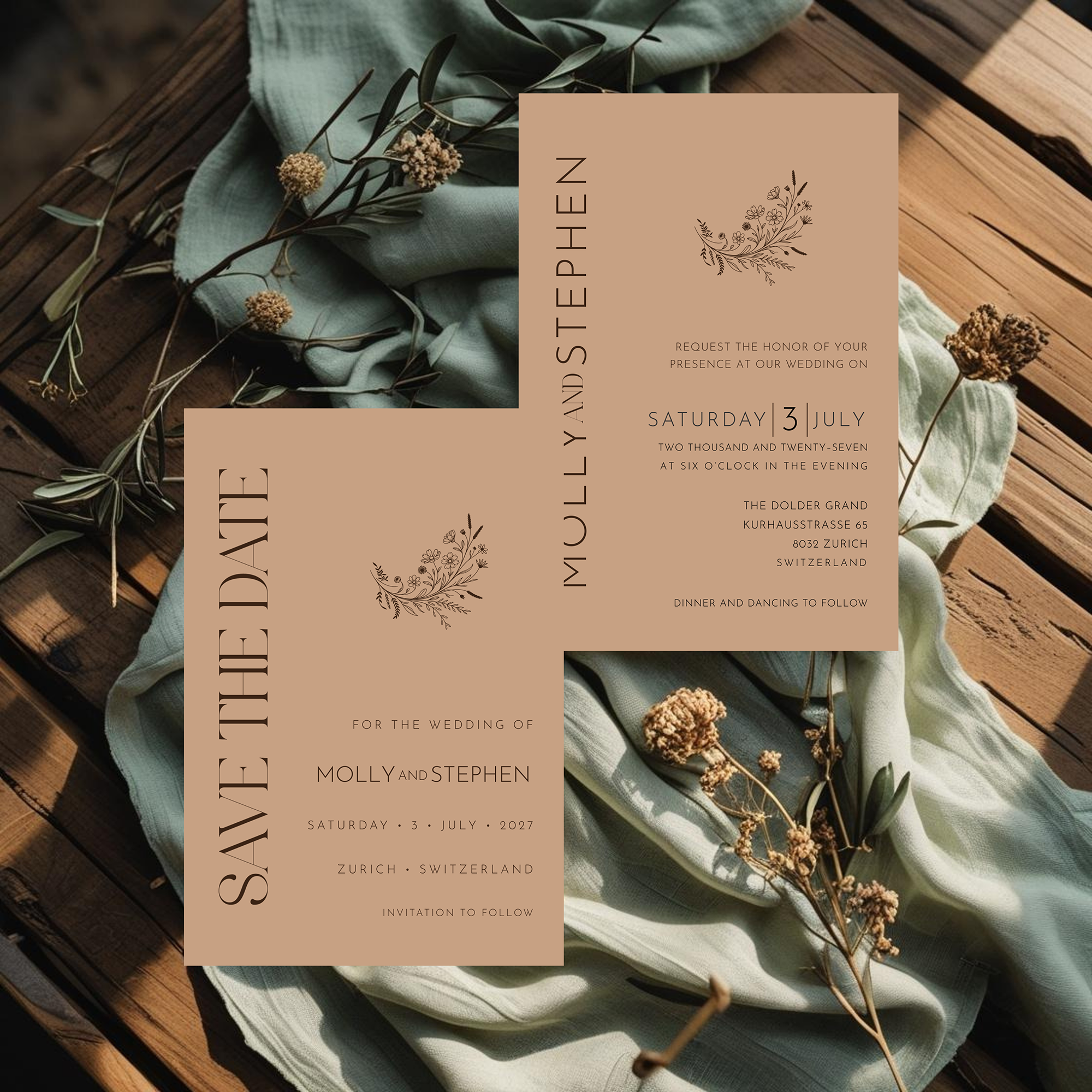
Dreamed of in Letterpress
Some designs seem made for a particular printing process. Sage Green is one of them. Delicate botanical details, beautiful typography, and the impression of letterpress on a soft cotton sheet.