Quick Answer: A cohesive wedding stationery suite carries the same visual story from the save-the-date through the thank-you card. Consistent typography, colors, artwork, and design details help every piece feel connected, not necessarily identical. Planning the stationery as a collection creates a more polished celebration and prevents couples from having to piece together mismatched designs later.
The wedding invitation may be the centerpiece of a stationery suite, but it is rarely the only printed piece a wedding requires.
There are save-the-dates to announce the celebration, details cards to answer practical questions, and day-of pieces to guide guests once they arrive. After the wedding, thank-you cards provide one final opportunity to carry the couple's style through to the end.
When each item is selected separately, the result can begin to feel fragmented. The save-the-date may be romantic and traditional, while the invitation is minimalist, and the reception pieces introduce an entirely different set of colors and fonts.
None of those designs may be wrong individually. They simply may not feel as though they belong to the same wedding. That is why wedding stationery should be designed as a collection rather than as one invitation.
Where Should Couples Start When Choosing Wedding Stationery?
Couples naturally begin by looking for an invitation. It is the piece that formally introduces the wedding and usually carries the greatest emotional significance.
But before choosing one, it helps to step back and consider the larger celebration.
Is the wedding taking place in a historic church, a coastal resort, an English garden, or beneath the warm light of Tuscany? Will the atmosphere be formal and traditional, relaxed and intimate, or somewhere in between?
These decisions influence more than the invitation. They establish a visual direction that can continue throughout the wedding. A thoughtfully designed collection allows the save-the-date, invitation suite, ceremony program, menu, and reception signs to share a common design language. Each piece has its own purpose, but together they tell one story.
Does a Cohesive Stationery Suite Have to Match Exactly?
Coordinated stationery should not look as though the same design has simply been copied and resized repeatedly. Instead, the pieces should feel related.
The invitation may feature the collection's full artwork, while a menu uses only a small botanical detail. A welcome sign might emphasize the couple's names, while a place card relies on understated typography and color.
The connection can come from several elements:
- A consistent color palette
- Complementary typefaces
- Repeated borders, monograms, or botanical details
- Similar spacing and composition
- A recognizable level of formality
These shared elements allow each piece to do its job while still belonging to the larger collection. It is much like decorating a home: every room does not need to look exactly the same, but there should be enough continuity that moving from one space to another feels natural.
What Role Does the Save the Date Play in the Stationery Story?
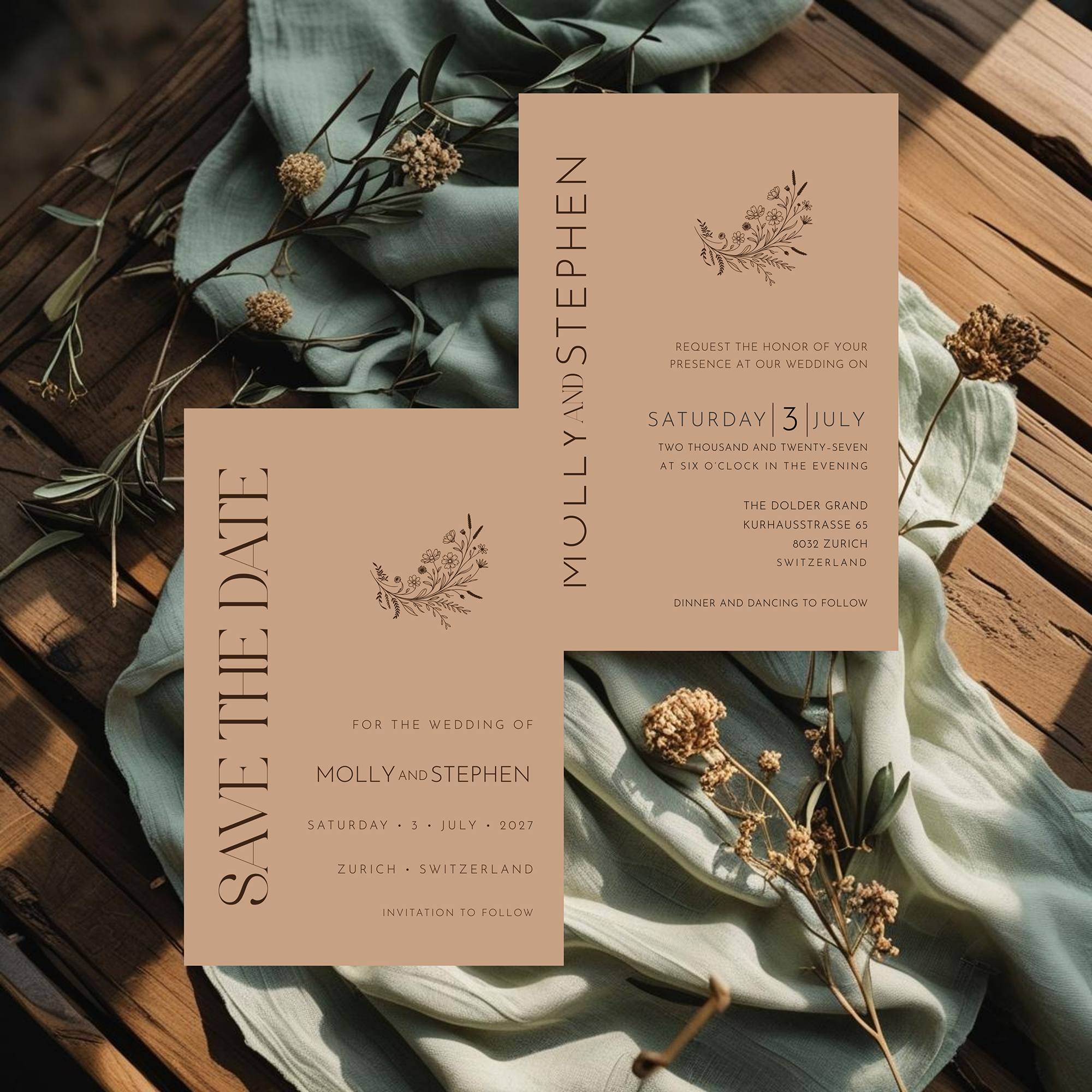
The save the date is often the first glimpse guests receive of the wedding. It does not need to reveal every detail, but it should begin setting expectations. Its typography, color, and overall mood can introduce the visual story that will later be developed more fully in the invitation suite.
When the formal invitation arrives, it should feel like the next chapter, not the beginning of an entirely different story. That sense of recognition helps create anticipation. Guests begin to understand the character of the celebration before they ever arrive.


Font: Saber
Terracotta
How Does the Invitation Suite Establish the Design Direction?
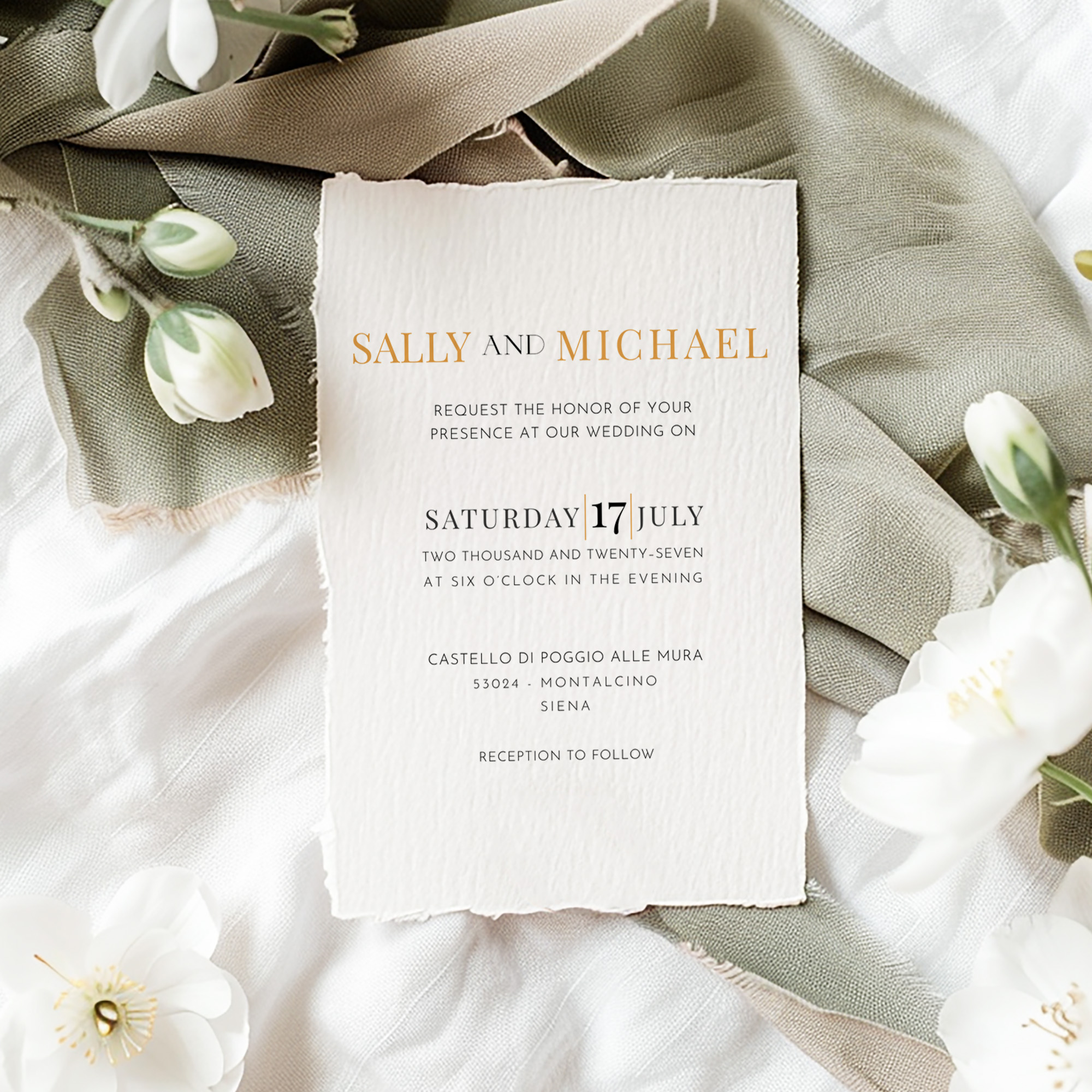
The invitation is where the stationery's visual identity becomes fully developed. Its design may continue onto an RSVP card, details card, and coordinating envelope. Even when the supporting pieces are simpler, repeating select typefaces, colors, and design elements helps the suite feel intentional when everything is held together.
This is also where hierarchy becomes especially important. The couple's names, wedding date, and location should receive appropriate emphasis, while supporting information remains easy to find and read. A beautiful suite does more than look coordinated; it organizes information clearly and guides the recipient through it.
How Does Stationery Function On the Wedding Day Itself?
Before the wedding, stationery communicates with guests from a distance. On the wedding day, it becomes part of the physical setting.
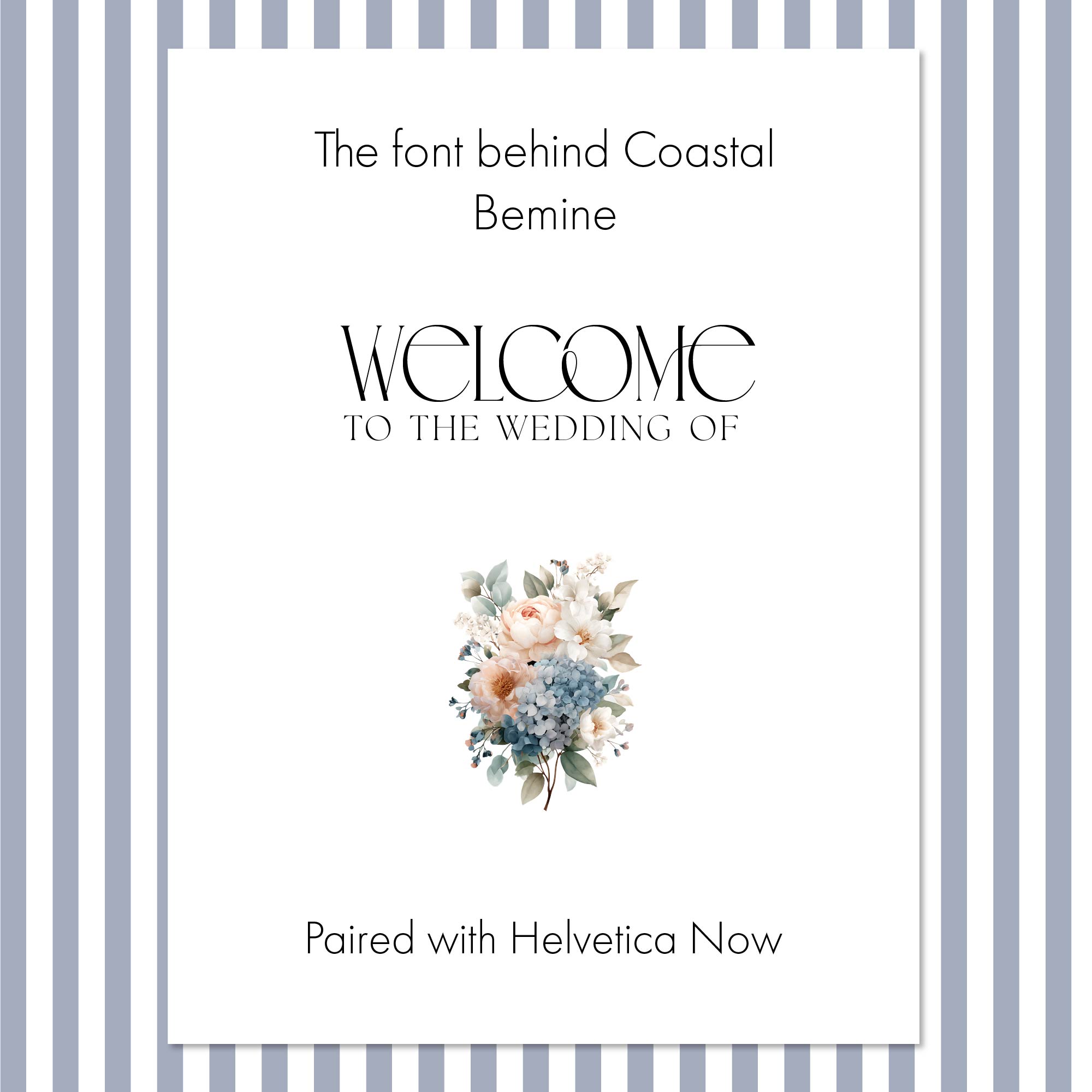
Welcome signs, ceremony programs, seating charts, place cards, table numbers, menus, and bar signs all help guests navigate the celebration. They are practical pieces, but they also contribute to the atmosphere of the day.
When these items coordinate with the invitation suite, they create a subtle sense of continuity. Guests may not consciously identify the repeated typeface or botanical detail, but they experience the wedding as considered and complete. The stationery also becomes part of the tablescape, ceremony space, and reception décor, working alongside the flowers, linens, and other carefully chosen details rather than appearing as an afterthought.
Day of Stationery


Why Does Planning a Full Collection Early Make Wedding Planning Easier?
Choosing a coordinated collection early makes the later stages of wedding planning easier. Rather than searching for a menu design shortly before the reception, or trying to recreate the invitation's typography for a welcome sign, couples already have an established visual direction. They can choose the pieces they need without starting over each time.
This does not mean every possible stationery item must be ordered or created. A small wedding may need only a few reception pieces, while a larger or more formal celebration may benefit from a complete range. The advantage is having those options available within one coordinated collection.
Why Does the Thank-You Card Matter to the Stationery Story?
The wedding may be over, but the stationery story is not quite finished. A coordinating thank-you card provides a graceful conclusion. It carries the couple's wedding style into their final communication with guests while leaving plenty of room for a personal message.
From the first announcement to the final note of gratitude, the stationery has accompanied guests through the entire experience.
A Thoughtful Collection Creates a Lasting Impression
Wedding stationery does not need to match every flower, tablecloth, or decorative detail. Its purpose is not to make the wedding feel rigid or overly coordinated. Its purpose is to create visual continuity.
When the stationery is planned as a collection, every piece feels as though it was chosen with intention. The result is polished, personal, and quietly memorable.
The Patti & Hank Heritage Collection includes coordinated stationery designed to carry one visual story throughout the celebration, from the first announcement to the final thank-you.