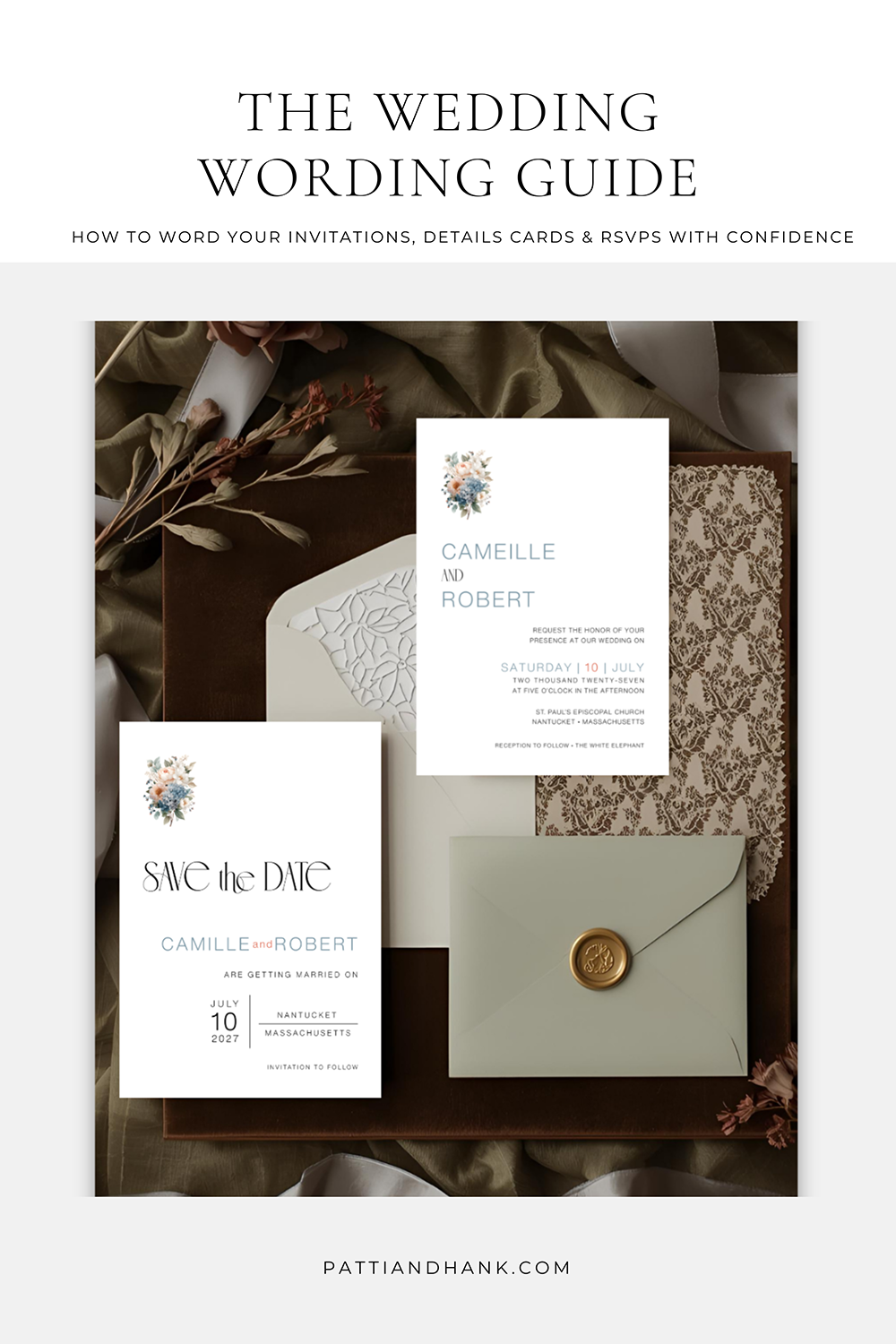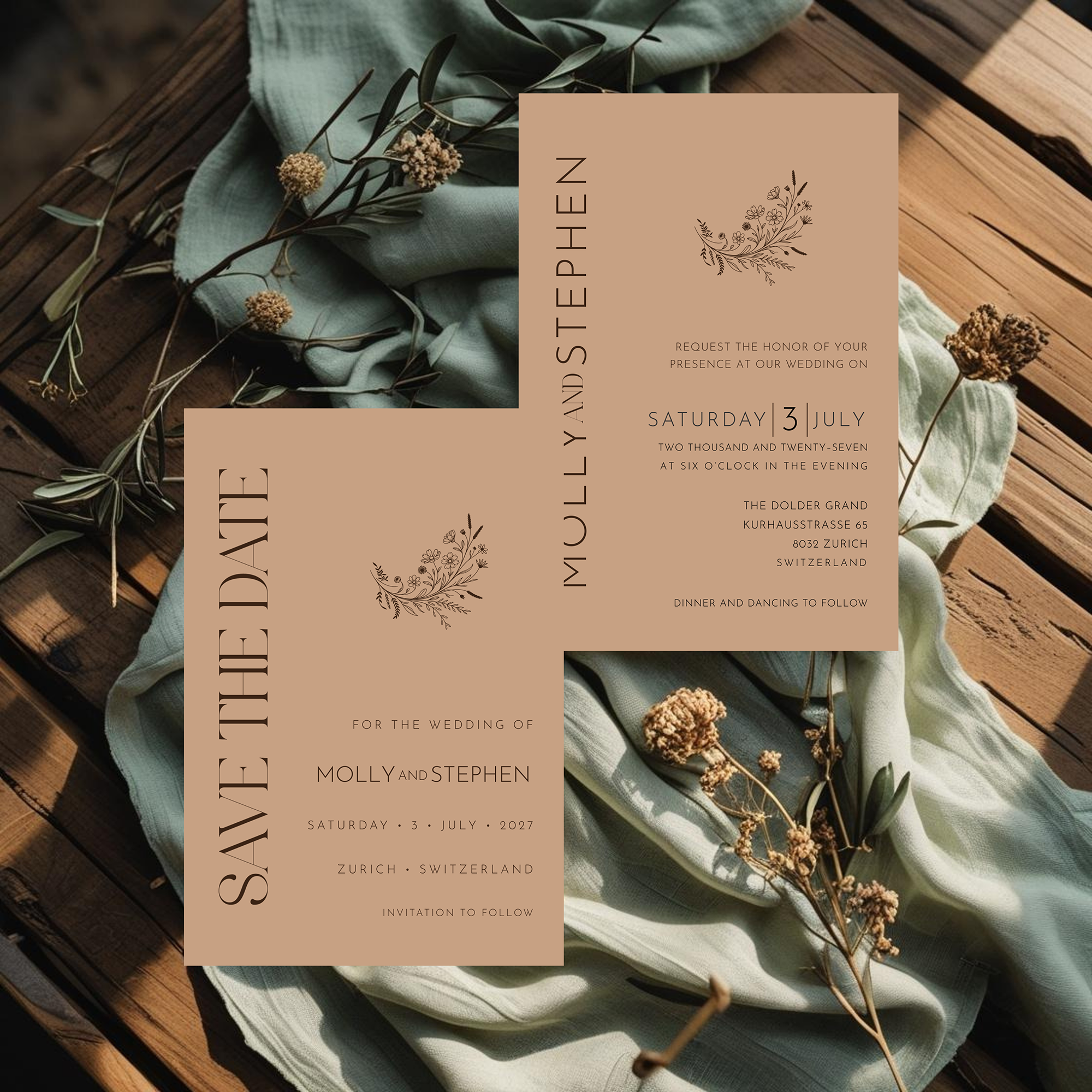
Quick Answer: Traditional wedding invitation wording is formal because it originally served a practical purpose. Every phrase communicated something specific: who was hosting the wedding, where the ceremony would take place, and how formal the celebration would be. The convention survives today less as a rule and more as a design and etiquette choice, one you can follow, adapt, or set aside once you understand what it's actually saying.
We've all read some version of "request the honour of your presence" on a wedding invitation. It sounds elegant, unmistakably formal, and to a modern couple, maybe a little old-fashioned.
But those words weren't chosen simply because they sounded beautiful. They meant something.
Traditional wedding invitation wording developed as a language of its own, and many of those conventions are still with us today. You don't have to follow all of them. But it's far more interesting to break with tradition once you understand the tradition you're breaking.
Who Is Actually Issuing the Invitation?
One of the first things you'll notice about a traditionally worded invitation is that it doesn't necessarily begin with the couple's names.
It begins with the hosts.
For generations, that meant the bride's parents:
Mr. and Mrs. William James Anderson request the honour of your presence at the marriage of their daughter . . .
That wording wasn't just a formality. The parents were named because they were hosting, and often paying for, the wedding.
Today, weddings are hosted and funded in far more varied ways. The couple may host. Both families may host jointly. Parents may contribute without being considered hosts at all. That's why modern invitations often open with "Together with their families," or simply with the couple's own names.
The family structure has changed. The underlying principle hasn't: the opening lines tell a guest who is inviting them.
Honour or Pleasure: Why the Word Choice Matters
This is one of those small pieces of etiquette worth knowing, because there's an actual reason behind it.
House of worship: the honour of your presence Any other venue: the pleasure of your company
"Honour" also traditionally keeps its British spelling with the u.
It's a small distinction, but it shows how precise formal invitation language once was. A few carefully chosen words communicated something about the occasion before a guest ever had to ask.
Would anyone notice if you used "honour" for a garden wedding today? No. But knowing why the distinction exists makes choosing your own words far more meaningful.
Why Are Dates and Times Spelled Out?
Saturday, the twenty-sixth of September two thousand twenty-six at half after four o'clock
We don't talk that way, and we wouldn't type a date that way anywhere else. But on a traditional formal invitation, dates and times are written out rather than expressed numerically.
Part of the effect is visual. A written-out date slows the language down and gives the invitation a ceremonial quality that "9/26/26 at 4:30 PM" simply doesn't have. It also changes the typography: the words become part of the composition, and a beautifully set line like "Saturday, the twenty-sixth of September" has a rhythm a row of numbers can't match.
This is one tradition where etiquette and graphic design happen to agree completely.
Why Does Formal Wording Sound So Impersonal?
Traditional: Mr. and Mrs. Anderson request . . . Modern: We would love for you to join us . . .
That can read as distant to modern ears, but the invitation was never meant to sound like a personal letter. It was a formal announcement issued by a host, and guests traditionally responded in kind, often with a handwritten acceptance also composed in the third person. The entire exchange followed a structure.
Today we're far more comfortable mixing formal stationery with warm, conversational language, and that's not a bad thing at all. A wedding invitation should sound like the wedding it represents.
What About All the Titles?
Mr. Mrs. Miss. Doctor.
Traditional invitations paid close attention to titles, full names, and family relationships, because those details once carried real social and familial information.
Some of those conventions feel genuinely awkward today. Families are more complicated. Couples marry later. Parents divorce and remarry. Couples may already share children. There may be two brides or two grooms. A couple may be hosting their own wedding after already building a life together.
Trying to force every modern family into wording built for one traditional family structure misses the point. The goal has always been graciousness and clarity: who is inviting the guest, who is getting married, and when and where it's happening. Those questions matter far more than fitting everyone into an outdated formula.
Formal Doesn't Have to Mean Stuffy
This is where traditional wording gets an undeserved reputation.
Formality isn't the same thing as stiffness. There's something lovely about language reserved for important occasions. We don't speak the way Shakespeare wrote, we don't dress for dinner the way our grandparents did, and we don't write letters as often as we once did. But a wedding is still a ceremony, and slightly more formal language can signal that this particular day is different from an ordinary Saturday afternoon.
That's what good wedding stationery has always done. It marks an occasion.
Can You Break the Rules?
Absolutely. I design wedding stationery, not citations for the etiquette police.
Use numerals if you want. Leave off titles. Write "invite you to celebrate with us." Put the couple's names first. Choose language that feels warmer, simpler, or more contemporary than anything above.
Just don't change traditional wording merely because someone told you it was outdated. Understand what the words mean first, then decide whether they belong to you.
Some traditions survive simply because no one has thought to change them. Others survive because, after generations, they still manage to say something beautifully.
And sometimes, "request the honour of your presence" says exactly what you want it to say.
Frequently Asked Questions
Some words are worth understanding before you decide to change them.